
Invisalign: What to Expect - From Consultation to Retainers
Most people know what Invisalign does. Fewer know what the journey actually looks like. How many appointments are there? What does it feel like to wear aligners? What happens when your teeth are finally straight?
This guide walks through the whole Invisalign process, step by step, so you know what to expect before you start. It covers the consultation, the digital scan, wearing your aligners, and the part many people forget about: retainers.
What is Invisalign?
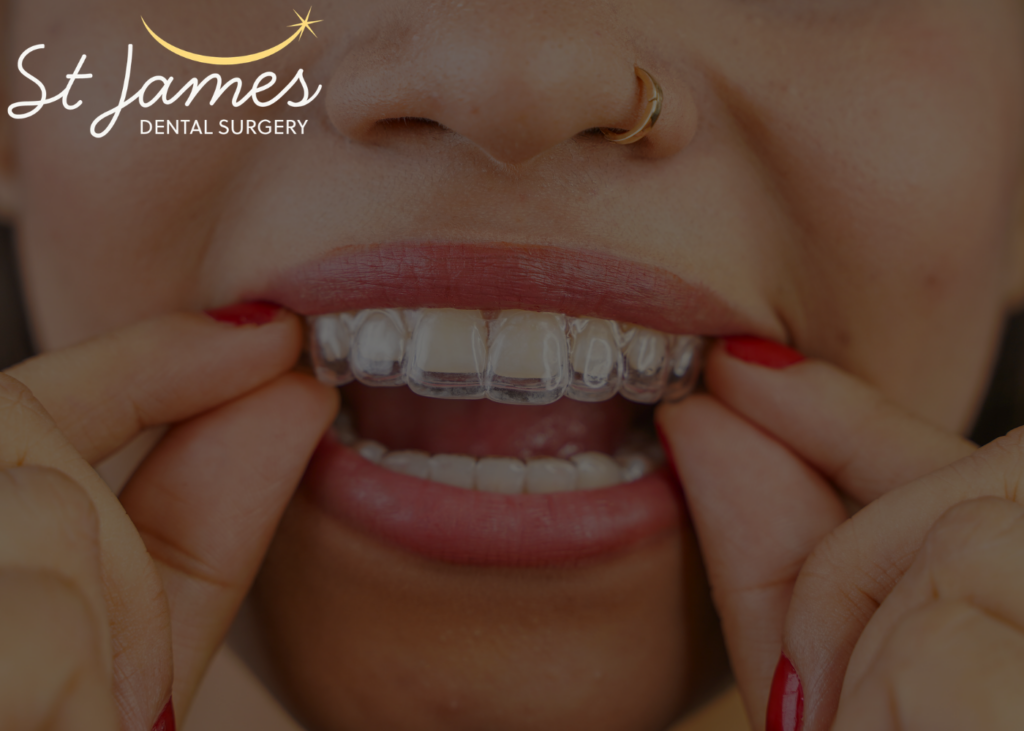
Invisalign is a system of clear, removable aligners that gradually move your teeth into a better position. You wear a series of custom-made trays, and each one moves your teeth a small amount. There are no metal brackets or wires, and you take the aligners out to eat, drink and clean your teeth.
It is used for crowding, gaps, crooked teeth and some bite problems, including overbites. Whether it suits you depends on your teeth and your goals, which is what the first appointment is for.
The Invisalign process at a glance
|
Stage |
What happens |
Roughly how long |
|---|---|---|
|
Consultation |
We check your teeth and gums and talk through your goals |
One visit |
|
Digital scan and plan |
A 3D scan, then a digital plan of your treatment |
Same visit or soon after |
|
Aligners arrive |
Your custom aligners are made and sent to us |
A couple of weeks |
|
Fitting |
We fit your first aligners and show you how to use them |
One visit |
|
Wearing aligners |
You change to a new set every one to two weeks |
Months, depending on your case |
|
Check-ups |
We review progress every few weeks |
Throughout |
|
Finishing |
Your teeth reach their final positions |
End of treatment |
|
Retainers |
You wear retainers to keep your result |
Long term |
The exact timings depend on how much your teeth need to move. Simple cases can take a matter of months. More complex ones take longer.
Step 1: The consultation
Everything starts with a conversation. At St James Dental Surgery, the first Invisalign consultation is free, and it is relaxed and unhurried.
We ask what you would like to change. We examine your teeth, gums and bite. And we check your mouth is healthy enough to start. Gum disease and decay need treating first, because moving teeth through unhealthy gums causes problems.
This is also the moment to ask questions. How long will it take? Will it show? Can I have it with my existing crowns or bonding? Honest answers now save surprises later.
Step 2: The digital scan and treatment plan
If Invisalign looks right for you, we take a 3D scan of your teeth with our iTero digital scanner. It builds a detailed 3D map of your mouth in a few minutes, with no putty trays or messy impressions.
Then we use the Invisalign planning software to map out your treatment. It shows how each tooth will move, step by step, and what the final result is expected to look like. You can see the plan and discuss it before anything is made.
Nothing is made until you are happy with the plan. If you want to adjust the goal, this is the stage to do it.
Step 3: Your aligners are made
Once the plan is approved, it is sent to Invisalign. Your aligners are made to fit your teeth exactly, as a series of trays, each slightly different from the last. They are then sent to us.
This usually takes a couple of weeks.
Step 4: Fitting your first aligners
When your aligners arrive, you come in for a fitting. We check the first set fits properly and show you how to put them in and take them out. You also get clear instructions on wear time and cleaning.
Sometimes we add small tooth-coloured bumps called attachments to certain teeth. They give the aligners something to grip, so they can move your teeth more precisely. They are the same colour as your teeth and are removed at the end of treatment.
In some cases, we also create tiny amounts of space between teeth by gently smoothing the sides. This is called reduction, and it is done carefully when needed. We will always explain it first.
Step 5: Wearing your aligners
This is the main part of treatment, and the part where you do most of the work.
Wear them for around 22 hours a day. Aligners only work when they are in. You take them out to eat, drink anything other than water, and clean your teeth. A good rule is to wear them all the time except at meals.
Switch to a new set every one to two weeks. Each tray moves your teeth a little more. Your plan will tell you exactly when to change.
Expect some pressure. A new set can feel tight for a day or two, which is a sign it is working. It settles quickly.
Expect a small lisp. Some people speak a little differently at first. It usually fades within a few days as your tongue adjusts.
Keep your routine tidy. Brush your teeth before putting your aligners back in, so food is not trapped against them. Rinse your aligners and clean them daily. Use a case whenever they are out, and never wrap them in a napkin. That is how most get thrown away.
Step 6: Check-ups along the way
You do not wear aligners alone for months. We see you every few weeks to check progress, make sure your teeth are tracking as planned and give you the next set. If something is not moving as expected, we adjust the plan.
Regular dental check-ups and visits to the dental hygienist continue during treatment, too. Clean teeth and healthy gums make everything go more smoothly.
How long does Invisalign take?
It depends on your case. Mild crowding or small gaps can sometimes be corrected in a matter of months. More complex cases take longer, often a year or more. Your digital plan gives an estimate, and we update you as treatment progresses.
Treatment time depends heavily on you as well. Wearing your aligners as instructed is the single biggest factor. Aligners left in the case do not move teeth.
Step 7: The end of active treatment
When your teeth reach their planned positions, active treatment is complete. We remove any attachments and polish your teeth. Many patients choose to finish with teeth whitening or a little composite bonding to refine the edges. That is how an Invisalign result can become part of a wider smile makeover.
But we are not done yet. This is when retainers come in.
Step 8: Retainers, the part you must not skip
After treatment, your teeth want to drift back towards where they started. The British Orthodontic Society is blunt about it: retainers are essential in almost all cases, and without them teeth tend to go crooked again.
At St James, we provide retainers as part of your treatment and talk through a simple wearing schedule. Typically, you wear them full time at first, then at night. NHS guidance on wearing retainers suggests every night for at least the first year, then part time after that.
Think of retainers as the final stage of treatment, not an optional extra. If you wear them, your result lasts. If you do not, you risk paying for the same treatment twice.
Common worries about Invisalign
“Will people notice?” Aligners are clear and fit closely. Most people will not notice them unless you tell them.
“Will it hurt?” There is some pressure when you start each new set. It is usually mild and short-lived. Most people find it much more comfortable than metal braces.
“What if I lose an aligner?” Contact us straight away. We will advise on the best next step for your treatment.
“Is it worth it?” For the right case, yes. But not every case is right for Invisalign. If another approach would give a better result, we will tell you.
What does Invisalign cost?
The cost depends on how complex your case is and how many aligners you need. We give you a clear price after your consultation, before you commit. Finance options are available, and you can see details on our fees and finance page.
Why choose St James Dental Surgery for Invisalign?
At St James Dental Surgery, we are a certified Invisalign provider. Our principal dentist, Dr Neha Tailor, walks you through the plan, keeps you updated and makes sure you finish with a result that lasts. You can find out more about the treatment on our Invisalign page.
If you are thinking about Invisalign, book a free consultation. We will examine your teeth, explain whether it suits you and talk you through exactly what to expect.
Medically reviewed by Dr Neha Tailor, Principal Dentist at St James Dental Surgery
Disclaimer
The information in this article is intended for general educational guidance only and does not constitute personalised dental advice. For an assessment of your specific bite and the treatment options appropriate for your situation, please book an appointment with a qualified dental professional.
St James Dental Surgery is a private dental practice at 18 Muswell Hill Broadway, London N10 3RT, led by Dr Neha Tailor. We offer Invisalign for overbite correction, composite bonding, smile makeovers, tooth extractions, biomimetic dentistry, dental implants, porcelain veneers, teeth whitening, dental crowns and emergency appointments. Call 020 8365 2090.
Frequently asked questions
How does the Invisalign process work?
You have a consultation, then a digital 3D scan to plan your treatment. Custom aligners are made, and you wear a new set every one to two weeks, with regular check-ups. At the end, you wear retainers to keep your teeth in place.
How long do you have to wear Invisalign each day?
Around 22 hours a day. You take your aligners out only to eat, drink anything other than water, and clean your teeth.
Do I have to wear retainers after Invisalign?
Yes. Teeth tend to move back towards their original positions, so retainers are essential. We provide them as part of treatment and explain how long to wear them.
Does Invisalign hurt?
Most people feel mild pressure for a day or two when they start a new set. It is usually much more comfortable than traditional braces.
Can I eat normally with Invisalign?
Yes, because you take the aligners out to eat. Brush your teeth before putting them back in, and only drink plain water while they are in.