
Tooth infection symptoms: how to spot them and what to do next
Written with input from the clinical team at St James Dental Surgery in Muswell Hill, led by principal dentist Dr Neha Tailor (GDC 268120).
A tooth infection rarely announces itself all at once. It might start as a tooth that feels a little “different” when you bite, or a twinge with cold drinks that lingers a bit too long. Then one evening it starts to throb, and by the next morning your cheek feels puffy.
The tricky part is that early tooth infection symptoms are easy to dismiss, and some of the later ones can come and go, which makes people think the problem has sorted itself out. It hasn’t. An infection inside a tooth doesn’t clear by itself.
This guide explains how a tooth infection develops, the symptoms to look out for at each stage, when it becomes urgent, and the treatment options, including how we try to save the tooth wherever we can.
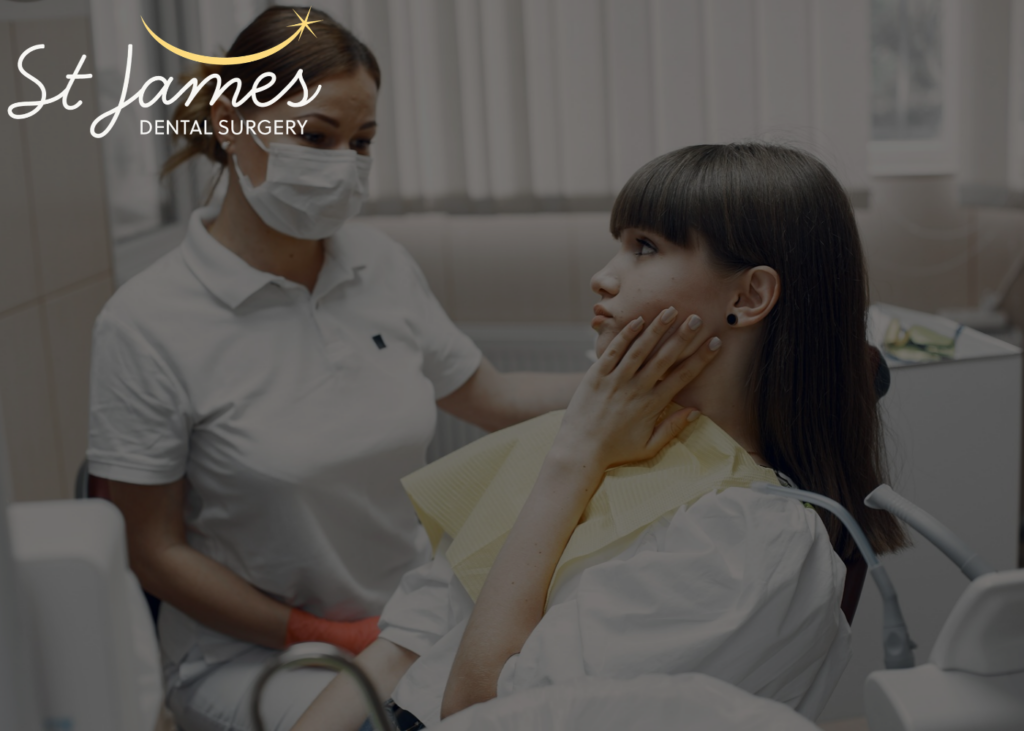
What is a tooth infection?
Inside every tooth is a soft core called the pulp, which holds the nerve and blood vessels. It’s protected by layers of hard enamel and dentine. A tooth infection happens when bacteria break through those layers and reach the pulp, or get in around the root.
Once bacteria are inside, the pulp becomes inflamed and eventually dies. The infection then travels down the root canal and out into the bone at the tip of the root. As your body fights back, pus collects and forms a dental abscess, a pocket of infection under pressure. That pressure is what causes the deep, throbbing pain many people describe.
How bacteria get in
- Tooth decay that’s been left long enough to reach the nerve
- A crack or break in the tooth, even one too small to see. Our guide on whether a cracked tooth can be saved explains how cracks let bacteria in
- Old, leaking fillings or crowns with gaps around the edges
- Gum disease, where deep pockets let bacteria travel down the side of the root
- A past knock to the tooth, which can damage the nerve, sometimes years before symptoms appear
Tooth infection symptoms, stage by stage
Not everyone goes through every stage, and some people have very few symptoms until quite late. But this is the pattern we commonly see.
Stage 1: an irritated nerve
- Sensitivity to hot or cold that lingers for more than a few seconds
- A dull ache that comes and goes
- Discomfort when eating sweet things
At this point, the nerve is inflamed but may still be saveable. It’s the best time to be seen.
Stage 2: the nerve is dying
- Pain that starts on its own, without a trigger
- Throbbing that’s worse when you lie down or at night
- Pain that spreads to your ear, jaw or temple
- Hot drinks making it worse, and cold sometimes easing it
Stage 3: infection around the root
- Pain when biting or tapping on the tooth
- The tooth feeling slightly raised or “long”
- Tenderness in the gum over the root
- A small spot or pimple on the gum that may leak fluid
- A bad taste or bad smell in the mouth
Stage 4: spreading infection
- Swelling of the gum, cheek, jaw or under the chin
- Swollen, tender glands in the neck
- A high temperature and feeling generally unwell
- Difficulty opening your mouth fully
One thing that catches people out: pain can suddenly disappear. This usually means the nerve has died completely or the abscess has burst and drained a little. The infection is still there, and it will usually flare up again.
Is it a tooth infection or something else?
Several conditions can feel similar. Here’s how they tend to differ.
|
Condition |
Where it hurts |
Typical signs |
|---|---|---|
|
Tooth infection (periapical abscess) |
One tooth, often hard to pinpoint at first |
Throbbing, pain on biting, lingering sensitivity, swelling |
|
Gum abscess |
The gum beside a tooth |
Swollen, tender gum; the tooth itself may be healthy |
|
Wisdom tooth infection |
Back of the mouth |
Swollen gum over a partly erupted tooth, bad taste, trouble opening wide |
|
Sinus pressure |
Several upper back teeth |
Dull ache, worse when bending forward, often after a cold |
|
Cracked tooth |
One tooth |
Sharp pain when biting down or releasing |
The only way to know for sure is an examination and usually an X-ray, which shows infection in the bone around the root that you can’t see from the outside.
If you’re in pain, an emergency appointment is usually the quickest way to get that X-ray and a clear diagnosis.
When a tooth infection is an emergency
Most tooth infections should be seen by a dentist within a day or two. If you’re in pain or notice swelling, our emergency dentist appointments are designed for exactly this, and we offer same-day appointments wherever possible.
But some symptoms mean the infection may be spreading and needs hospital care straight away. Call 999 or go to A&E if you have:
- Difficulty breathing or swallowing
- Swelling spreading to your eye, down your neck or under your tongue
- Swelling so severe you can’t open your mouth
- A high temperature with a fast heartbeat, confusion or feeling very unwell
These are rare, but they’re serious and shouldn’t wait for a dental appointment. If it’s out of hours and you’re unsure, call NHS 111.
Why a tooth infection won't go away on its own
It’s natural to hope the pain will settle, especially if painkillers take the edge off. But the infection sits inside the tooth, where your immune system and medication can’t fully reach it. Without treatment it can:
- Destroy the bone that holds the tooth in place
- Spread to neighbouring teeth or the jaw
- Lead to losing the tooth
- In rare cases, spread into the face, neck or bloodstream
Leaving a tooth infection doesn’t just risk more pain later. It also reduces your options. A tooth treated early can often be saved with less work; one left for months may be beyond repair.
Treating an infection early is also usually simpler and less costly than the alternative, which can mean a tooth extraction followed by a replacement such as a dental implant.
How we treat a tooth infection
Treatment has two aims: remove the infection and stop it coming back. After an examination and X-ray, we’ll explain what we’ve found and the options that make sense for that tooth.
Relieving the pressure
If there’s a lot of swelling, the first step may be to drain the infection. This brings fast relief. The area is numbed first, so it’s much more comfortable than people expect.
Root canal treatment
If the tooth can be saved, root canal treatment removes the infected pulp, cleans and disinfects the inside of the tooth and seals it. It’s carried out under local anaesthetic and feels much like having a filling.
Restoring the tooth with biomimetic dentistry
An infected tooth that’s been treated often has a lot of missing structure, from the original decay or crack and from the treatment itself. Traditionally, many of these teeth would be drilled down and covered with a crown.
Dr Neha Tailor offers biomimetic dentistry, an approach that rebuilds the tooth in layers designed to behave like natural enamel and dentine. The materials are bonded firmly to the tooth, which helps seal it against bacteria leaking back in, a common reason for reinfection. Because it removes as little healthy tooth as possible, it can also help teeth last longer.
Biomimetic restorations aren’t right for every tooth, but for many patients they’re a more conservative alternative to a crown. We’ll talk you through whether it suits your situation.
Our page on biomimetic dentistry in Muswell Hill explains the process in more detail, including how the layers are built up and bonded.
Removing the tooth
Sometimes a tooth is too badly damaged to save, for example when the crack runs down into the root or very little tooth is left. In that case, a tooth extraction removes the source of the infection completely. We’ll always talk through this option honestly and only recommend it when saving the tooth isn’t realistic.
If you do have a tooth removed, our guide to eating after tooth removal covers what to eat during the first few days.
What about antibiotics?
Antibiotics are often expected, but on their own they don’t cure a tooth infection. They can’t reach the infection inside the tooth properly and don’t remove the cause, so the problem usually comes back once the course ends. UK guidelines recommend antibiotics only when the infection is spreading or you’re generally unwell, and always alongside dental treatment.
Replacing a tooth lost to infection
If a tooth has to come out, the gap doesn’t have to stay. A dental implant is often the closest thing to a natural tooth: a small titanium post placed in the jaw that supports a crown. It doesn’t rely on neighbouring teeth and helps protect the bone where the tooth used to be.
The infection needs to have fully cleared and the area healed before an implant is placed. At St James, implant treatment is carried out with Dr Phil Sterrett, our implant dentist (GDC 73180). Our article on the dental implant process explains each stage.
Other options include a bridge or a denture. Our guide to missing teeth options compares them side by side.
What to do while you wait to be seen
These steps can help you feel more comfortable until your appointment:
- Take over-the-counter painkillers such as paracetamol or ibuprofen, following the dose on the packet
- Rinse with warm salt water a few times a day
- Sleep with your head raised to reduce throbbing
- Hold a cold compress against your cheek, 15 minutes at a time
- Chew on the other side and avoid very hot, cold or sugary foods
And a few things to avoid: don’t put aspirin on your gum, don’t use heat on your face, and don’t try to burst a gum swelling yourself.
How to lower your risk of a tooth infection
Most tooth infections start with problems that can be caught early:
- Brush twice a day with fluoride toothpaste and clean between your teeth daily
- Keep sugary snacks and drinks to mealtimes
- Don’t ignore lingering sensitivity or a tooth that feels different when you bite
- Keep your gums healthy. Our guide to gingivitis symptoms explains the early signs of gum disease
- Have regular check-ups, so decay, cracks and leaking fillings are spotted before bacteria reach the nerve
Why patients choose St James Dental Surgery
St James Dental Surgery is a private dental practice at 18 Muswell Hill Broadway, led by principal dentist Dr Neha Tailor. Our team includes associate dentist Dr Maurice Dadoun (GDC 72277) and implant dentist Dr Phil Sterrett. We’re open Monday to Friday from 9am to 6pm and on Saturday mornings, with same-day appointments available for patients in pain.
Our approach is simple: find the cause, get you comfortable, and save your natural tooth wherever that’s genuinely the best option. When it isn’t, we’ll tell you honestly and help you plan what comes next. If you think you have a tooth infection, please don’t wait for it to get worse.
For urgent problems, our emergency dentist service aims to see patients in pain as quickly as possible. You can also find our full range of treatments, fees and team on the St James Dental Surgery website.
You can call us on 020 8365 2090.
Disclaimer
The information in this article is intended for general educational guidance only and does not constitute personalised dental advice. For an assessment of your specific bite and the treatment options appropriate for your situation, please book an appointment with a qualified dental professional.
St James Dental Surgery is a private dental practice at 18 Muswell Hill Broadway, London N10 3RT, led by Dr Neha Tailor. We offer Invisalign for overbite correction, composite bonding, smile makeovers, tooth extractions, biomimetic dentistry, dental implants, porcelain veneers, teeth whitening, dental crowns and emergency appointments. Call 020 8365 2090.
Frequently asked questions
What are the first signs of a tooth infection?
Early tooth infection symptoms include sensitivity to hot or cold that lingers, a dull ache that comes and goes, and discomfort when biting. As it progresses, you may notice throbbing pain, swelling, a bad taste or a spot on the gum.
How long can a tooth infection go untreated?
There’s no safe amount of time. Some infections stay quiet for months, while others spread within days. Because a tooth infection won’t clear by itself and can become serious, it should be checked by a dentist as soon as possible.
Can a tooth infection spread to the rest of the body?
It’s rare, but yes. An untreated dental abscess can spread into the face, neck or, very occasionally, the bloodstream. Signs such as facial swelling, difficulty swallowing or breathing, or a high temperature need urgent medical care.
Will I need a crown after treatment for a tooth infection?
Not always. Many teeth need some form of protection after treatment, but biomimetic restorations can often rebuild the tooth while keeping more of its natural structure. Your dentist will advise on the best option for that tooth.
Can I get antibiotics instead of treatment?
No. Antibiotics alone don’t cure a dental abscess, because they can’t remove the source of the infection inside the tooth. They may be prescribed if the infection is spreading, but you’ll still need the tooth treated.