
The dental implant process
What actually happens, step by step
Dental implants have a reputation for being a big commitment. In some ways that’s fair. But the actual dental implant process is more straightforward than most people expect, once you understand what each stage involves. This guide walks through it properly. It covers what happens at each step, how long it takes, and honestly, whether it hurts.
Who dental implants are for
Implants are generally suitable for anyone who’s lost one or more teeth. You’ll also need enough healthy bone in the jaw to support them. They’re used for a single missing tooth, several teeth, or as an anchor for a full arch of replacement teeth.
If you’ve already looked at your options for a missing tooth, you’ll know implants aren’t the only route. Bridges and dentures both remain valid choices depending on your situation. We cover the differences in our missing teeth options guide. Implants tend to be the preferred choice when preserving the jawbone long-term matters most. They’re the only option that replaces the tooth root itself.
Stage one: assessment and planning
Every dental implant process starts with a thorough assessment. This includes an examination of your teeth and gums. We also take X-rays or a 3D scan to check bone volume, and talk through your medical history and goals.
This stage matters more than people expect. It’s where we work out whether you have enough bone to support an implant directly. If not, a bone graft may be needed first to build up the area. Smoking, certain health conditions, and gum disease can all affect suitability. We’ll be upfront if any of these need addressing before treatment can go ahead.
Stage two: bone grafting, if needed
Not everyone needs this step. If there’s enough healthy bone already, treatment can move straight to placing the implant. If there isn’t, a bone graft adds material to the jaw to create a stable base.
This typically involves a period of healing, often three to six months, before the implant itself can be placed. It’s the main reason the dental implant process can take longer for some patients than others. Skipping this step when it’s genuinely needed risks the implant failing to integrate properly later on.
Stage three: placing the implant
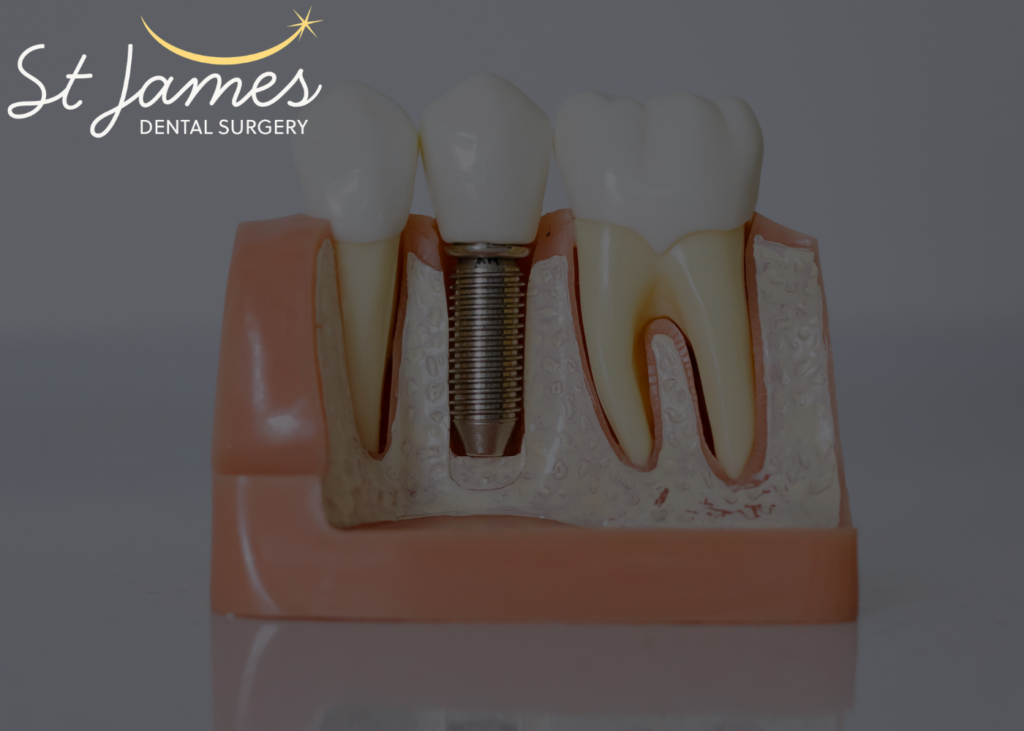
This is the core of the procedure. A small titanium post is placed into the jawbone under local anaesthetic. It’s generally more comfortable than people expect. Most patients describe it as similar to having a tooth removed, rather than anything more dramatic.
Once placed, the implant needs time to fuse with the surrounding bone, a process called osseointegration. This is what gives the implant its long-term strength and stability. It’s also why the process can’t be rushed. This stage usually takes between three and six months, depending on the jaw and the individual.
Stage four: fitting the crown, bridge, or denture
Once the implant has properly integrated with the bone, the final restoration is fitted. This might be a single crown, a bridge spanning several teeth, or a full arch of replacement teeth. Patients having All-on-4 or All-on-6 implants fall into that last category.
This is usually a straightforward appointment. The difficult biological work has already happened during the healing phase. The result is designed to look, feel, and function like a natural tooth.
Are dental implants painful
This is genuinely one of the most common questions we get. It’s worth answering honestly. The placement procedure itself is done under local anaesthetic, so you shouldn’t feel pain during it. Afterwards, mild soreness, swelling, or bruising is normal for a few days. It’s similar to what you’d expect after a tooth extraction.
Most patients manage this comfortably with over-the-counter pain relief, and it settles within a week. Severe or worsening pain isn’t typical and is worth contacting us about. For the vast majority of patients, discomfort is manageable and short-lived rather than something to dread.
How long do dental implants take overall
This varies depending on whether a bone graft is needed. Without one, the process from placement to final restoration typically takes three to six months. With a bone graft, it can extend to six to twelve months in total. That extra time is largely due to healing rather than active treatment.
It’s a longer timeline than many people expect going in. But most of that time is simply the body healing in the background, not repeated visits or ongoing treatment.
Dental implant recovery time and aftercare
Initial recovery after placement is usually a matter of days. Most patients return to normal activities within 48 to 72 hours. It’s worth avoiding strenuous exercise and very hot food for the first day or two.
Longer-term, proper dental implant aftercare makes a real difference to how well the implant lasts:
- Keep up with excellent oral hygiene around the implant site
- Attend regular check-ups so we can monitor healing and long-term implant health
- Avoid smoking, since it significantly increases the risk of implant failure
- Wear a night guard if you grind your teeth, to protect the implant from excess force
Dental implant success rate
Implants have a strong long-term track record when properly planned and looked after. Data from NHS sources suggests around 90% of implants placed a decade ago are still present and functional today. That reflects what we see clinically as well.
Success depends heavily on proper assessment beforehand and good technique during placement. How well the implant is cared for afterwards matters too. This is exactly why each stage of the process matters as much as it does.
Why the process is worth taking seriously
It’s tempting to focus only on the end result: a replaced tooth that looks and functions naturally. But the dental implant process is designed the way it is for good reason. Skipping steps or rushing healing time increases the risk of problems later. So does choosing a provider who cuts corners on assessment. You can read more about NHS guidance on dental treatments, including implants, on the NHS website.
At St James Dental Surgery, implant treatment is led by Dr Phil Sterrett, our dedicated implant dentist, alongside thorough assessment from the wider team. Getting each stage right gives you the best chance of a result that lasts for decades rather than years.
Getting started
If you’re considering implants, the first step is simply a proper assessment. That way you know exactly what your own dental implant process would involve, rather than working from a general timeline. Regular check-ups in the meantime also help. They keep your remaining teeth and gums in the best possible condition, which supports better outcomes if you do go ahead with implants later.
If you’re considering dental implants, get in touch. We’ll talk you through exactly what your own process would look like.
Medically reviewed by Dr Phil Sterrett, Implant Dentist at St James Dental Surgery, GDC number 73180.
Disclaimer
The information in this article is intended for general educational guidance only and does not constitute personalised dental advice. For an assessment of your specific bite and the treatment options appropriate for your situation, please book an appointment with a qualified dental professional.
St James Dental Surgery is a private dental practice at 18 Muswell Hill Broadway, London N10 3RT, led by Dr Neha Tailor. We offer Invisalign for overbite correction, composite bonding, smile makeovers, tooth extractions, biomimetic dentistry, dental implants, porcelain veneers, teeth whitening, dental crowns and emergency appointments. Call 020 8365 2090.
Frequently asked questions
What does the dental implant process actually involve?
It typically involves an initial assessment, a bone graft if needed, placing the titanium implant, a healing period for it to fuse with the jawbone, and finally fitting the crown, bridge, or denture. Each stage matters for long-term success.
Are dental implants painful?
The placement procedure is done under local anaesthetic, so it shouldn’t hurt at the time. Mild soreness or swelling afterwards is normal for a few days and is usually well managed with over-the-counter pain relief.
How long does the dental implant process take from start to finish?
Without a bone graft, the process typically takes three to six months. With a bone graft, it can extend to six to twelve months, mostly due to healing time rather than repeated treatment visits.
What is the success rate of dental implants?
Implants have a strong long-term track record, with data suggesting around 90% remain functional a decade after placement, provided they’re properly planned, placed, and cared for afterwards.
Do I need a bone graft before getting a dental implant?
Not everyone does. It depends on how much healthy bone is available in the jaw. This is assessed during your initial consultation using X-rays or a 3D scan.